

Supreme Court Decides Pay Case Involving Fed Employees, Military Reservists
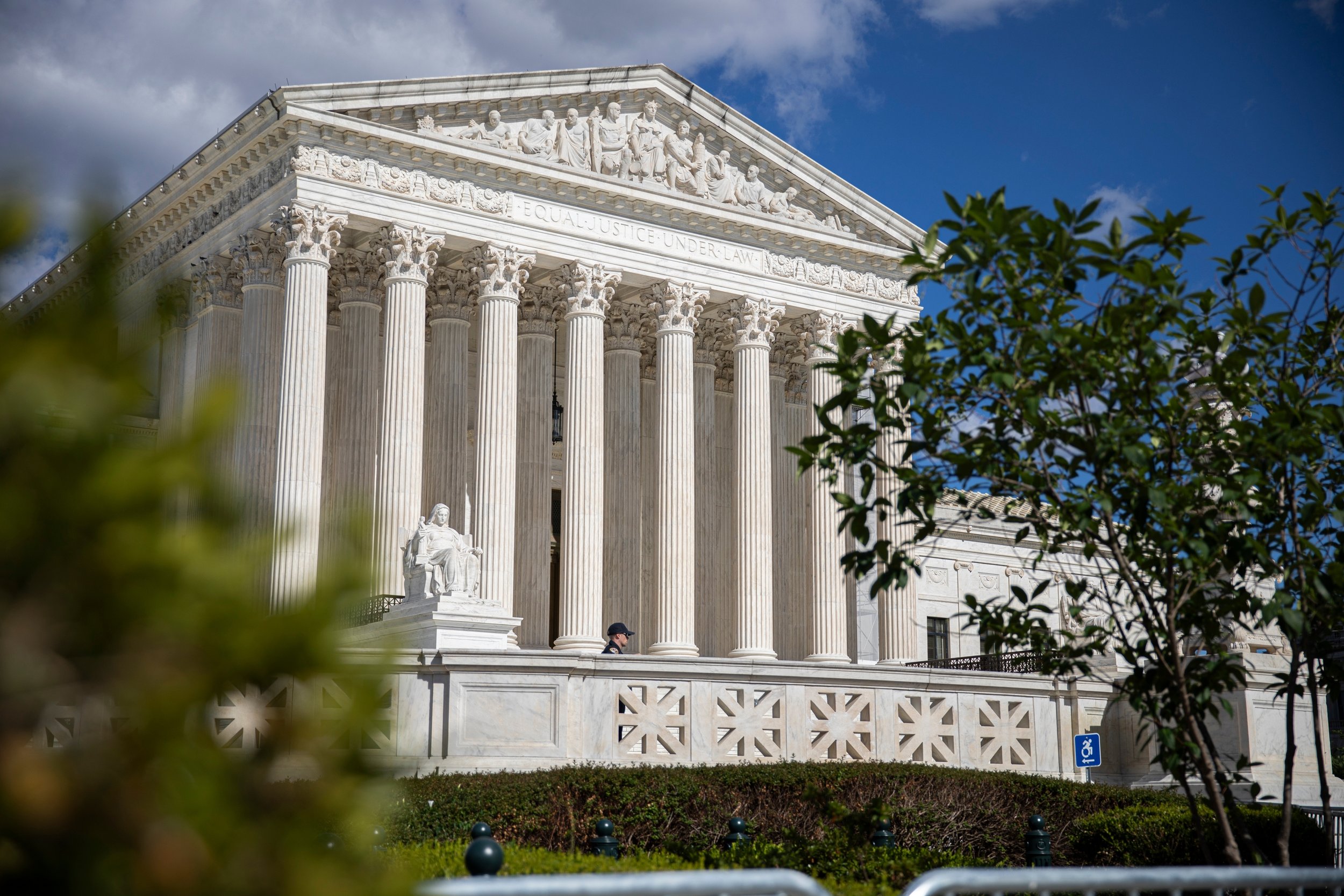
The U.S. Supreme Court makes a landmark decision on federal pay, ruling that federal employees who are also in the military reserve must be paid the equivalent of their civilian salary when called to duty during national emergencies.
The case, Feliciano v. Department of Transportation, was a 5-4 decision and reversed the decision by the U.S. Court of Appeals for the Federal Circuit.
The arguments hinged on the word “during” and what it means to serve “during” a national emergency.
“Substantive Connection” to National Emergency
The plaintiff, Nick Feliciano, was an air traffic controller with the Federal Aviation Administration (FAA) while also serving as a reservist in the U.S. Coast Guard. Feliciano was called to active duty from 2012 to 2017, escorting ships into the port of Charleston, South Carolina, to support the war effort in Iraq and Afghanistan. Feliciano was paid at a lower rate than what he would have earned as an FAA employee.
Feliciano’s attorneys argued he should have been paid at a civilian rate under the Differential Pay Statute, which requires federal employees to be paid their civilian rate while serving during national emergencies.
However, government attorneys argued that Feliciano did not qualify under the statute, because he was not called up in direct support of a declared national emergency.
In his majority opinion, Justice Neil Gorsuch wrote that employees do not have to show a “substantive connection” to the national emergency and that serving “during” a national emergency usually means “contemporaneous with.”
"Requiring a substantive connection would create interpretive difficulties, as the statute provides no principled way to determine what kind of substantive connection would suffice,” stated Justice Gorsuch.
Justice Gorsuch was joined by Chief Justice John Roberts, and Justices Amy Coney Barrett, Brett Kavanaugh, and Sonia Sotomayor.
The dissent was written by Justice Clarence Thomas, joined by Justices Samuel Alito, Elena Kagan, and Ketanji Brown Jackson.
Justice Thomas wrote that the country has been under one national emergency or another for decades and the majority’s finding will create wider access to differential pay than Congress intended. Justice Thomas would have sent the case back to the lower court for review.