
Lessons are Learned as Program Helps the Coast Guard, First Responders, Respond to a Biological Attack
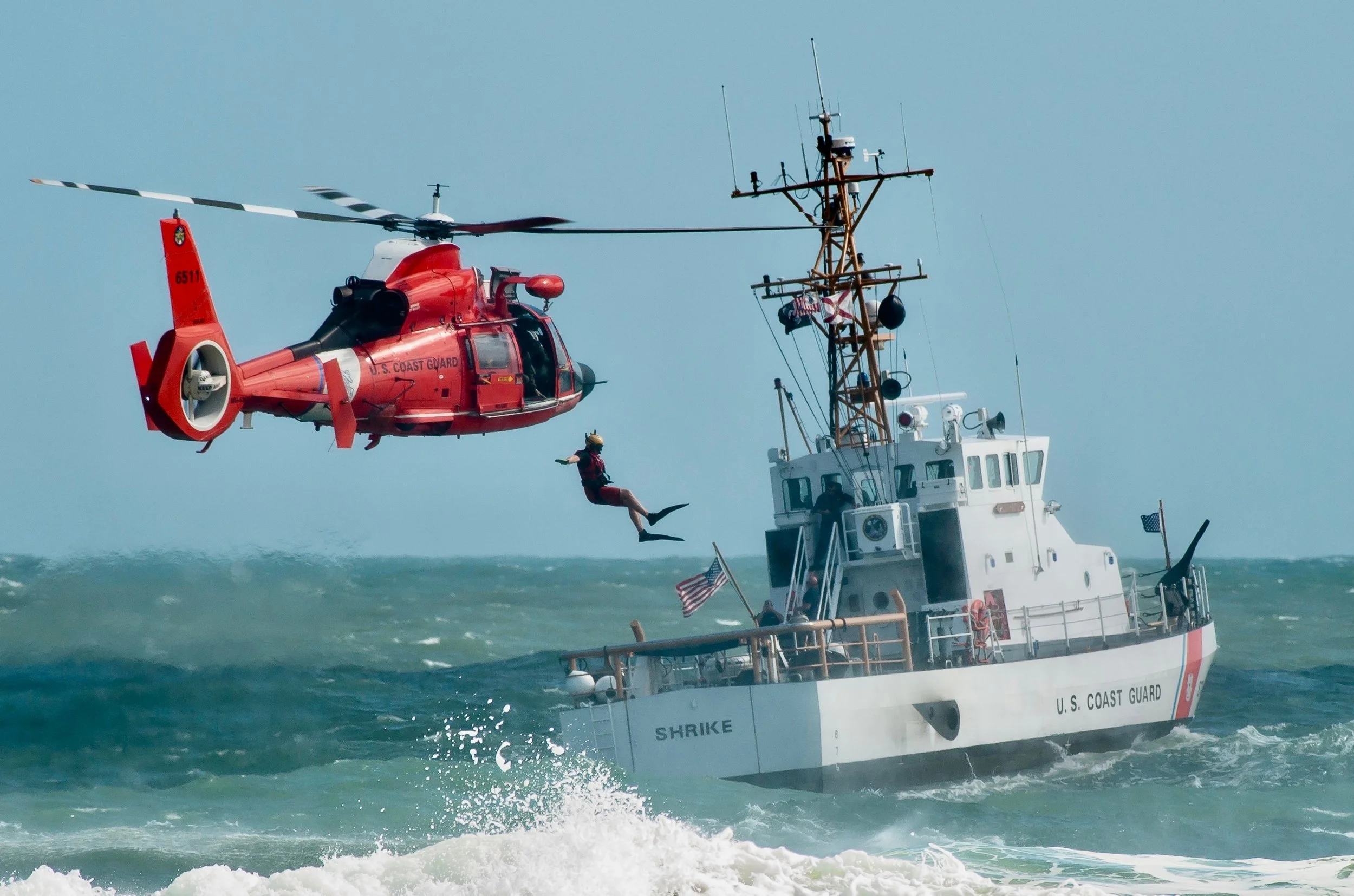
If there ever is a biological attack in the United States, first responders are critical for minimizing the fallout. We’re talking about the swift need for containing the attack, testing for contamination, and ensuring decontamination, among other responses.
Now after more than seven years, a project designed to help the U.S. Coast Guard (USCG) better prepare for such an attack is sunsetting, with lessons learned and experiences that will be useful not just for USCG but for other federal agencies and first responders as well.
The Analysis for Coastal Operational Resiliency (AnCOR) is preparing to sunset at the end of September. AnCOR is a collaboration between USCG, the Environmental Protection Agency (EPA), and the Department of Homeland Security’s Science & Technology (S&T) Directorate.
The project was called a “true testament to the power of cross-government scientific collaboration.”
Exercises, Demonstrations, Field Studies
Over its lifetime, teams from the agencies worked together to develop and demonstrate capabilities and strategic guidelines to prepare for a wide-area release of a biological attack. The analysis included ways to mitigate impacts to USCG facilities and surrounding areas.
Among the events were field exercises, scientific studies, and a large-scale wide-area demonstration all with the goal of getting USCG and the nation better prepared for a potential biological attack.
Exercises include a recent one in April-May 2025 at the USCG Atlantic Strike Team’s New Jersey base. The exercise simulated the release of an anthrax spore and had responders run through the decision-making process and mitigation activities. To simulate real world scenarios, different complications were thrown in, and participants received experience in developing alternative sample collection strategies and revising decontamination strategies.
During the exercise, USCG participants used the EPA-developed Readiness and Emergency Strategy Planning On-Demand (RESPOND) software tool and its three modules – sampling, decontamination, and waste management.
“The training received extremely positive feedback from attendees at all three National Strike teams, and the EPA will now use USCG participants’ feedback to enhance RESPOND,” stated S&T.
The Atlantic exercise comes after previous exercises were conducted at the Pacific and Gulf Strike Teams’ bases.
Up next, S&T will deliver comprehensive guidance documents on each phase of the bioresponse process as well as maintenance procedure cards.
AnCOR also held a wide area demonstration exercise at Fort AP Hill in Virginia in 2022. In that exercise, responders tested their ability to scale-up traditional biological sampling methods and tested newly developed and non-traditional sampling methods outdoors. Sampling methods included grabbing leaves, grabbing grass, and using sponge sticks.
“Through AnCOR, we have not only helped the USCG prepare for real-world emergencies, but also amassed a wealth of knowledge that can be applied beyond maritime environments to clean up wide areas, including terrestrial and urban environments,” stated S&T.
If you’re interested in learning more, S&T has a podcast series on biological response, called “Speed up the Cleanup.”